How to Operate a Dissolved Air Flotation System
Dissolved Air Flotation (DAF) is a critical water treatment process that relies on precise startup procedures and constant monitoring to ensure efficiency. Proper operation involves three main subsystems: air dissolution, chemical dosing, and sludge removal.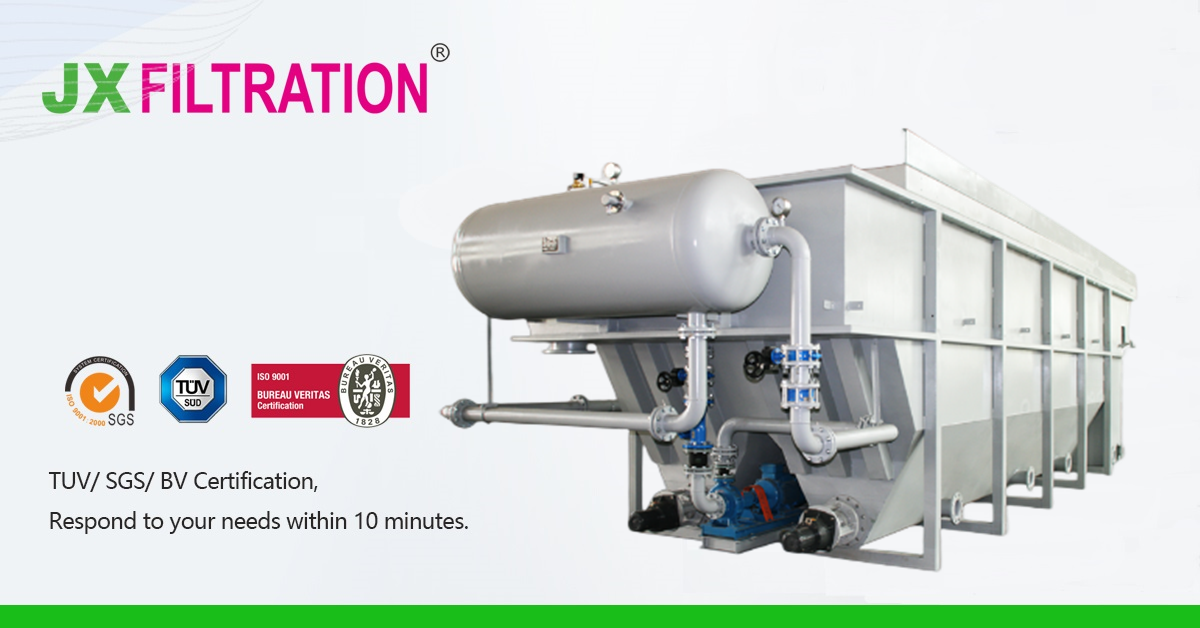
1. Air Dissolution System Startup
The process begins by stabilizing the air and water mixture.
-
Compressor First: The air compressor must be started before the pump to build initial pressure.
-
Pressure Parameters: The air dissolution tank should be adjusted to maintain a pressure between 0.3 and 0.5 MPa.
-
Vacuum Check: Once the pump starts, ensure the tank vacuum remains stable between 0.01 and 0.02 MPa.
-
Visual Confirmation: The release chamber should produce a "milky white" flow of micro-bubbles (≤30μm). If large bubbles appear, the system must be shut down immediately to clean the clogged release devices.
2. Influent & Chemical Dosing
Proper flocculation is key to removing contaminants.
-
Flow Control: Start the feed pump and adjust the flow control valve. The influent rate should not exceed 110% of the unit’s rated capacity.
-
pH Adjustment: Monitor the wastewater pH. If it falls below 6.0, add alkali to raise it to a neutral range of 7.0 to 8.0.
-
Chemical Addition: Start the chemical feed pumps once water enters the flocculation zone. Dosing rates should be adjusted visually based on the formation of the floc.
3. Sludge Removal & Scraping
Efficient sludge removal prevents system overload.
-
Timing: Activate the sludge scraper only when the surface sludge layer reaches a thickness of 10 to 20 cm and has a dense texture.
-
Speed Control: The scraper speed should be managed carefully, typically between 0.5 and 1 m/min. Sludge that is loose requires a slower speed, while denser sludge can tolerate a slightly faster pace to avoid breaking up the accumulated material.
4. Routine Operational Monitoring
Continuous observation ensures the system meets discharge standards.
-
Key Metrics: Operators must record the air tank pressure, influent flow, DAF tank level, and effluent Suspended Solids (SS) every 30 minutes. The effluent SS must be maintained at ≤30 mg/L.
-
Troubleshooting:
-
Loose Sludge: If sludge appears loose, increase the PAM (polymer) dosage or raise the dissolved air pressure.
-
Turbid Effluent: If the effluent becomes cloudy, reduce the influent flow immediately and inspect the flocculation process or release devices for failure.
-
Pressure Drops: Sudden fluctuations in dissolved air pressure typically indicate a leak in the pump seal or pipelines, requiring immediate inspection.
-
By adhering to these structured steps and monitoring protocols, a DAF system can achieve optimal solid-liquid separation and meet regulatory compliance.
Any requirements, contact us now!
Grace
Email: grace@filtrationchina.com
Mobile/WhatsApp/WeChat: +86 17269571160