How a Disc Centrifuge Works: Principles of Separation
In industries ranging from food processing to biotechnology and marine applications, the need for efficient liquid-solid separation is critical. One of the most effective machines for this task is the disc centrifuge. Known for its compact design and high-speed performance, this equipment uses centrifugal force to separate materials of different densities with remarkable precision.
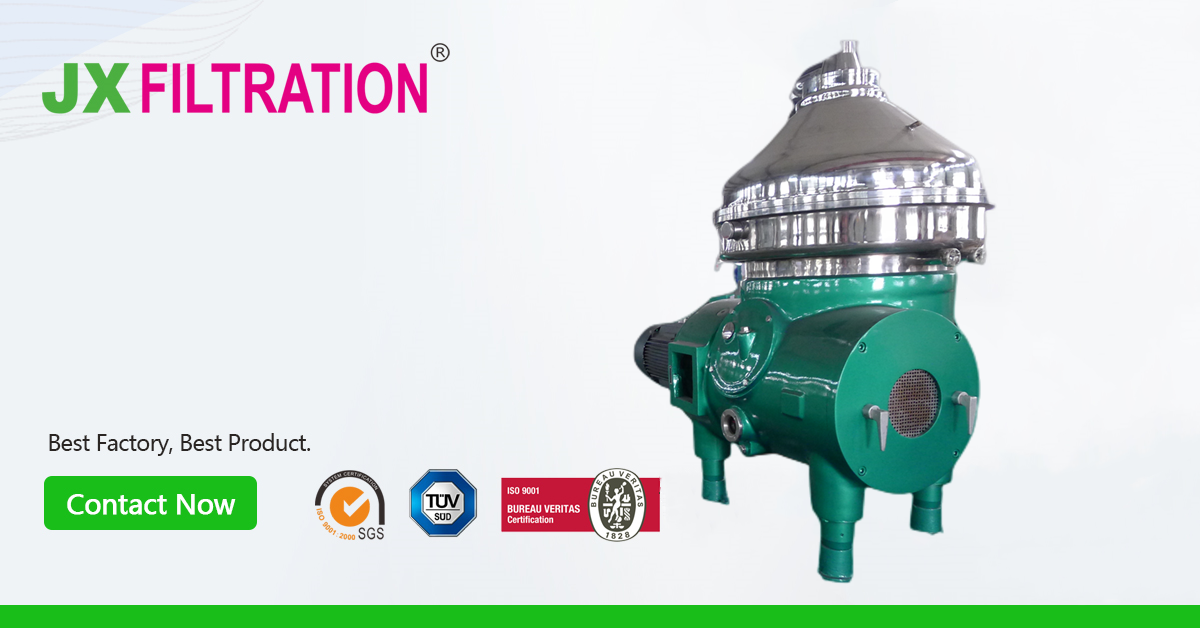
Working Principle
At its core, a disc bowl centrifuge operates on the principle of sedimentation enhanced by centrifugal force. By spinning at very high speeds, it generates forces hundreds or even thousands of times greater than gravity, forcing heavier particles to settle out of the liquid phase.
Key Component: The Disc Stack
The defining feature of this centrifuge is its set of special conical discs stacked closely together inside the rotating bowl. These discs serve a crucial purpose: they increase the surface settling area. By dividing the liquid into many thin layers, the discs dramatically shorten the distance that solid particles must travel to be separated. This design significantly speeds up the separation process compared to simple bowl centrifuges.
Step-by-Step Process
Here is how the separation process works in sequence:
-
Inlet and Feed: The liquid mixture (feed) enters the centrifuge through a stationary inlet tube and flows into the center of the rotating bowl.
-
Separation Under Centrifugal Force: Once inside, the mixture is subjected to extremely high centrifugal forces. This force causes the components to stratify based on their density:
-
The denser solids are thrown outward toward the wall of the rotating bowl.
-
The less dense liquid phases are displaced toward the center.
-
-
Flow Through Discs: As the liquid travels through the spaces between the stacked discs, the fine solid particles settle onto the underside of each disc. They then slide back down the disc surface and are slung outward to the bowl wall.
-
Liquid Discharge: The clarified liquids (often separated into light and heavy phases in liquid-liquid applications) continue toward the center. They rise through vertical channels and flow out of the centrifuge through their respective pressurized outlets.
-
Solids Accumulation: Meanwhile, the separated solids accumulate at the inside wall of the rotating bowl. Over time, this solids layer builds up.
-
Solids Discharge (Intermittent): Once a certain volume of solids has accumulated, they must be removed. In modern self-cleaning models, this is achieved by an open-shut mechanism controlled by a sliding piston. The piston momentarily opens ports at the periphery of the bowl, and the solids are discharged intermittently at high speed without stopping the centrifuge. This allows for continuous operation.
The disc bowl centrifuge combines high-speed rotation with intelligent internal design to achieve efficient and continuous separation. By using stacked discs to maximize settling area and an automated discharge system to remove solids, it provides a reliable solution for clarifying liquids and recovering valuable materials across a wide range of industrial applications.
Any requirements, contact us now!
Grace
Email: grace@filtrationchina.com
Mobile/WhatsApp/WeChat: +86 17269571160