Vibrating Screen for Lime Milk (Brazil)
📍 Brazil · 🏭 University · 📦 Vibrating Screen
We recently had the pleasure of working with a public university in Brazil. Their research team was dealing with a tricky material – lime milk (slaked lime slurry) with a solids content ranging from 15% to 50%. Its consistency was like a creamy milkshake, and they needed to process about 310 kg per hour.
Their goal was to screen this lime milk using 40‑mesh and 100‑mesh screens to separate fine particles. The vibrating screen had to be made of SS304 for durability, and they were looking for a reliable solution that could handle this viscous, sticky slurry.
Step 1 – Understanding the need
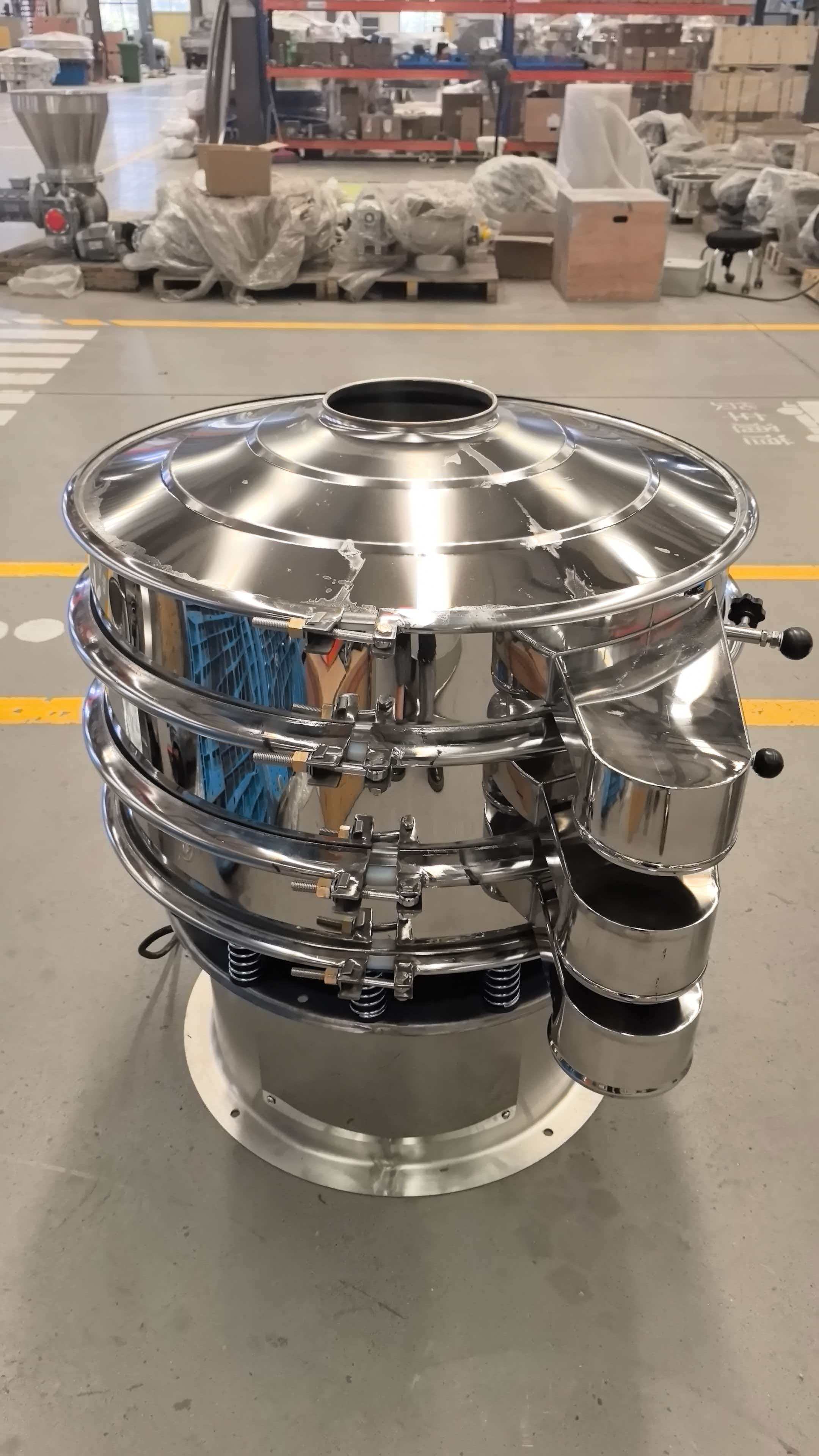
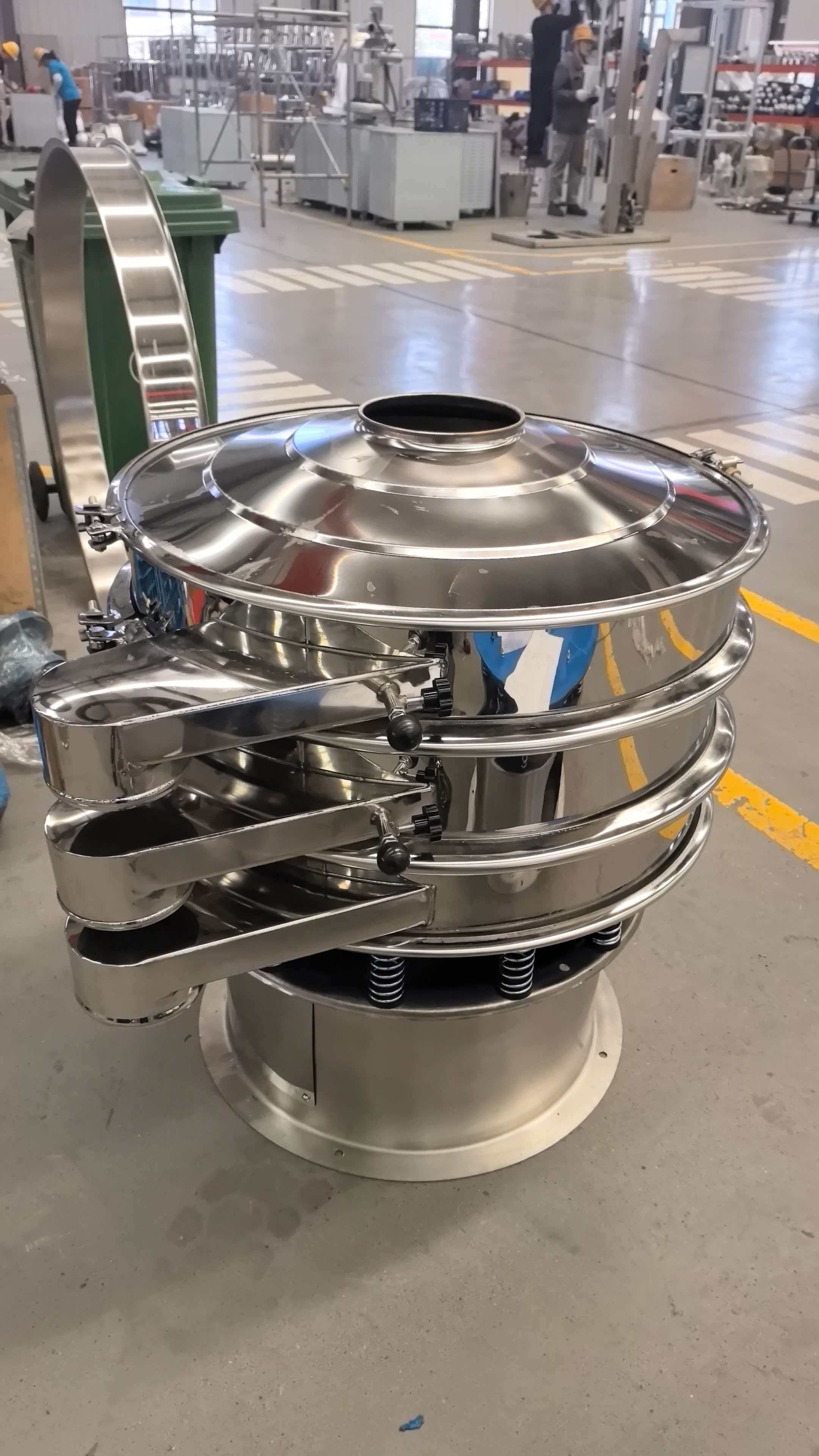
After discussing their application, we recommended our 800‑series two‑deck vibrating screen with three discharge outlets. Each outlet can be rotated 360 degrees to any angle, giving them full flexibility to direct the screened material wherever they needed. This design is perfect for processing liquids with high solids content.
Step 2 – Demonstrating with video
To help them visualise the performance, we shared a video of our vibrating screen separating lime milk and other viscous liquids. The footage showed how effectively the machine handles thick slurries without clogging – and it gave them confidence in our approach.
Step 3 – Clarifying the ultrasonic misconception
The client initially asked for an ultrasonic system. However, we gently explained that ultrasonic technology is only suitable for dry, dusty powders – not for liquids like lime milk. Using it on a wet slurry would be ineffective and could even damage the equipment. They appreciated our honest advice and dropped the idea.
Step 4 – Addressing their installation concerns
Once they were satisfied with the design, they raised two practical questions:
-
How should the vibrating screen be mounted? They wondered if it needed a concrete base.
We assured them that our unit comes with expansion bolt holes at the bottom. They could simply drill into a concrete foundation and secure it with expansion bolts – sturdy and straightforward. -
Could we raise the screen about 500 mm higher to match their existing equipment?
Absolutely. We confirmed that custom stands could be fabricated to add that height, which would also make it easier to collect the processed material underneath.
Step 5 – Finalising the power supply
Before production, we double‑checked their electrical requirements:
-
Voltage: 380V
-
Frequency: 60Hz
-
Phase: Three‑phase
Everything matched our standard configuration, so we moved forward with manufacturing.
The result
The 800‑series vibrating screen is now ready, designed to handle their lime milk at 310 kg/h with 40‑ and 100‑mesh screens. The SS304 construction resists corrosion, and the adjustable outlets give them operational freedom. We're proud to support a university's research and help them solve their screening challenge.
Take a look at what we delivered:
Check for more information:
[LinkedIn]| [Facebook]| [Instagram]| [X]
📢 Any requirements? Contact us now!
💼 Grace
📧 Email: grace@filtrationchina.com
📱 Mobile / 💬 WhatsApp / 💬 WeChat: +86 17269571160
💡 We're here to help – reach out anytime! 🌟